Builds warmth and generous fruit while retaining poise.

A colour is born
The same lineage.
A different skin.
Pinot Gris is not a planned crossing. It is a natural grey mutation of Pinot Noir: genetically close, yet visibly transformed in the colour of its ripe berries.
Pearl grey, pink, copper and blue-red skins make it one of the most visually distinctive white varieties.
Variety passport
Its identity,
in six precise points.
- Origin
- Burgundy, France
- Identity
- Grey mutation of Pinot Noir
- Type
- White Vitis vinifera
- VIVC number
- 9275
- Ripening
- Early
- Synonyms
- Pinot Grigio · Grauburgunder · Ruländer
01
02
03
04
05
06
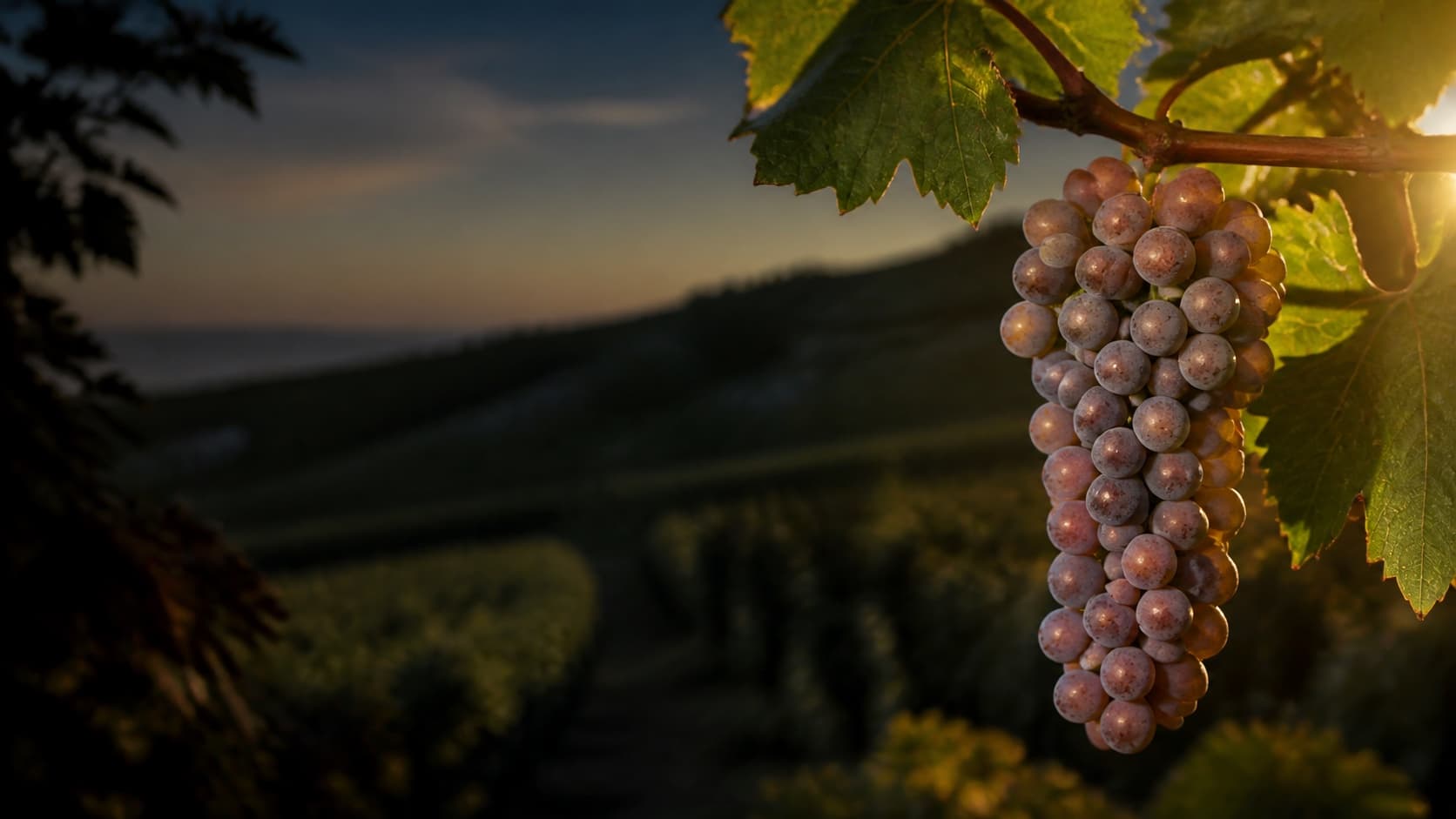
Anatomy of the variety
A small bunch.
A full spectrum.
Pinot Gris forms small or very small, compact bunches. Fine-skinned berries shift from grey and muted pink to copper and blue-red as they ripen.
Compact bunch A cylindrical shape and densely set berries define its silhouette.
Fine skin Calls for gentle handling and attentive ripeness decisions.
Moisture sensitivity Compact clusters benefit from a dry, well-ventilated canopy.
In the vineyard
Ripeness asks
for good light.
Fine-skinned fruit forms compact, closely set clusters.
Readily develops ripeness and body with moderate acidity.
Thrives on deep, dry and well-exposed sites with limestone.
Aromatic spectrum
Softness of fruit.
A glint of spice.
Pinot Gris can be generous and aromatic without losing elegance, joining ripe orchard fruit, white flowers and a discreet savoury shadow.
At Talaska
Burgundian heritage.
Melsztyn light.
Talaska’s southern and south-western aspect provides the light Pinot Gris needs for measured ripening. Clay-limestone soils and the valley’s airflow suit its preference for exposed, relatively dry sites.
Role in the collectionTexture · ripe fruit · discreet freshness
Botanical sources
Prepared from recognised ampelographic and viticultural sources, including VIVC, Julius Kühn-Institut and official wine-sector publications.
Variety index